Tiffany of Dance Brave
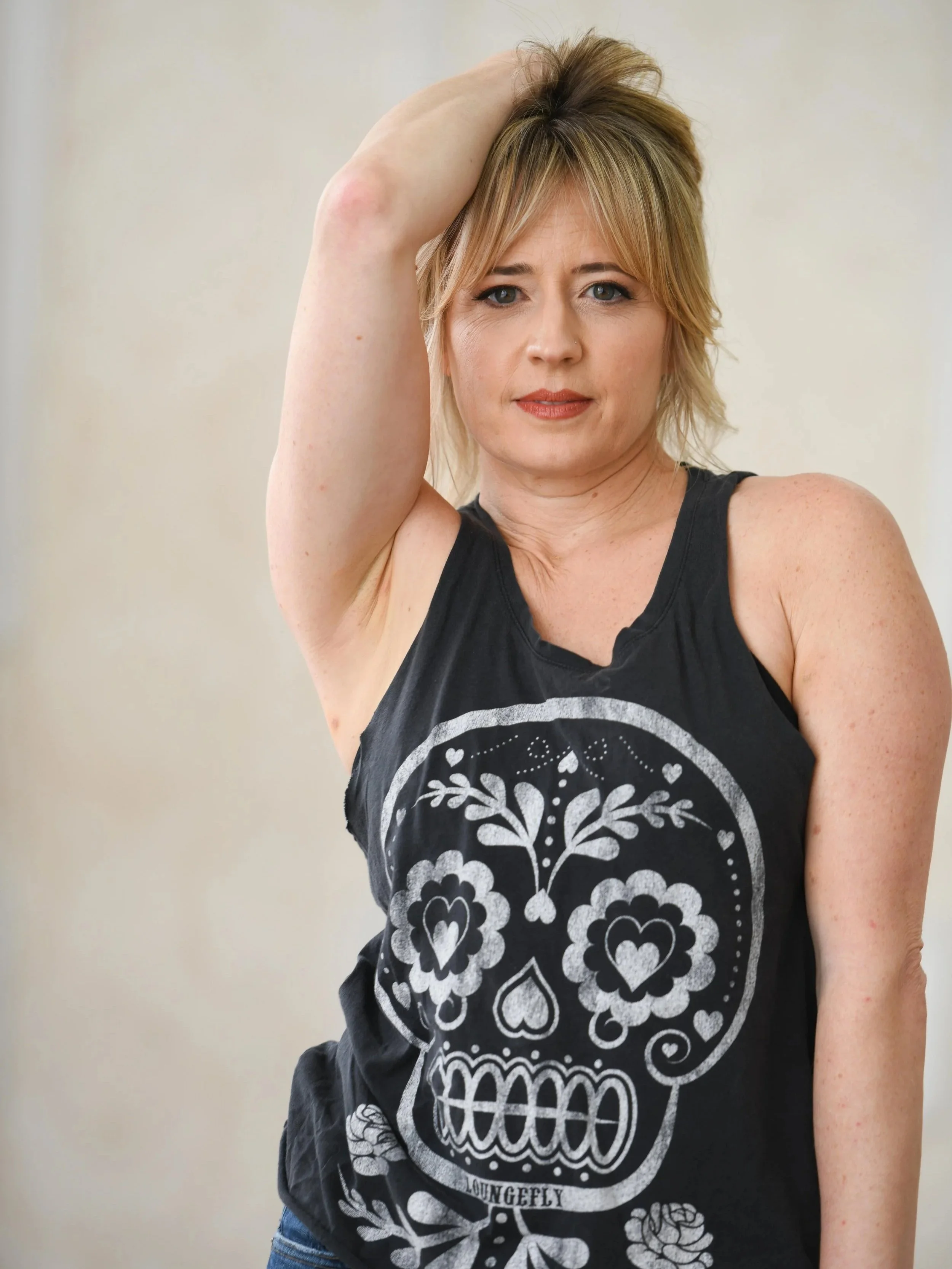
Tony and I first met Tiffany Chambers-Goldberg on a sunny afternoon at Chanticleer in Cary.
It was busy, of course, and she walked in with all the aura.
In the very best way possible, you can tell Tiffany is from the West Coast.
Perhaps it’s in her styling, or her grounded energy, or just the chillest of vibes, but you can tell she has one foot in this realm and one in the ethereal.
Tiffany is a Chronic Pain Therapist and Erotic Embodiment Practitioner with her Cary-based studio Dance Brave.
Seeking to build more community since moving to NC in 2022, Tiffany reached out to us for a casual meet-and-greet.
Conversation came easily as she shared her insights into entrepreneurship, parenthood, alternative therapies, and resources for consciousness expansion.
I’m being intentionally coy here, as Tiffany shared some incredible healing experiences she has had exploring her own consciousness.
We were so captivated by her adventures that it was only natural that Tiffany be the next Lantern Spotlight. Shining our light on her will have to compete with her natural glow, but we’ll do our best.
A Body That Learned to Survive
Long before Dance Brave had a name, movement was already part of Tiffany’s story.
She grew up in a home she describes as “emotionally cold and intimately frozen,” shaped by generations of survival and hyper-independence. At seven, she moved across the country with her mother and sister and wouldn’t see her father again for another seven years. By seventeen, she had been kicked out of the house with a year of high school still ahead of her. At eighteen, she survived a sexual assault.
There were wounds here that would take years to understand. Fear of rejection followed her into relationships, as did fifteen years of disordered eating. Tiffany can name those patterns now with the language of nervous systems and attachment, but at the time, she was simply finding ways to survive them.
One of those ways was gymnastics.
Tiffany excelled at the sport, and it gave her something that much of the rest of her life did not… a sense of identity, pride, and control. And while she couldn't have known it then, movement would continue to be one of the threads she followed back to herself.
Teaching came almost as naturally. At fourteen, she began teaching gymnastics. By twenty-four, she was leading Intensive Forrest Yoga classes in Los Angeles. By twenty-eight, she had trained in Structural Integration, Cranial Sacral Therapy, and Shiatsu Anma, learning and practicing alongside somatic educators including Ellen Heed, Dr. Medici, and Hugh Milne. Later, Jill Miller, creator of Yoga Tune Up, chose Tiffany to continue teaching her classes at Santa Monica Equinox.
But for all she was learning about the body, Tiffany was still searching for something for her own.
She describes those years as a search for a way to “fix” herself and to finally feel safe inside her skin. Control had once helped her navigate a life that felt chaotic, but eventually, those same instincts began creating new boundaries around her.
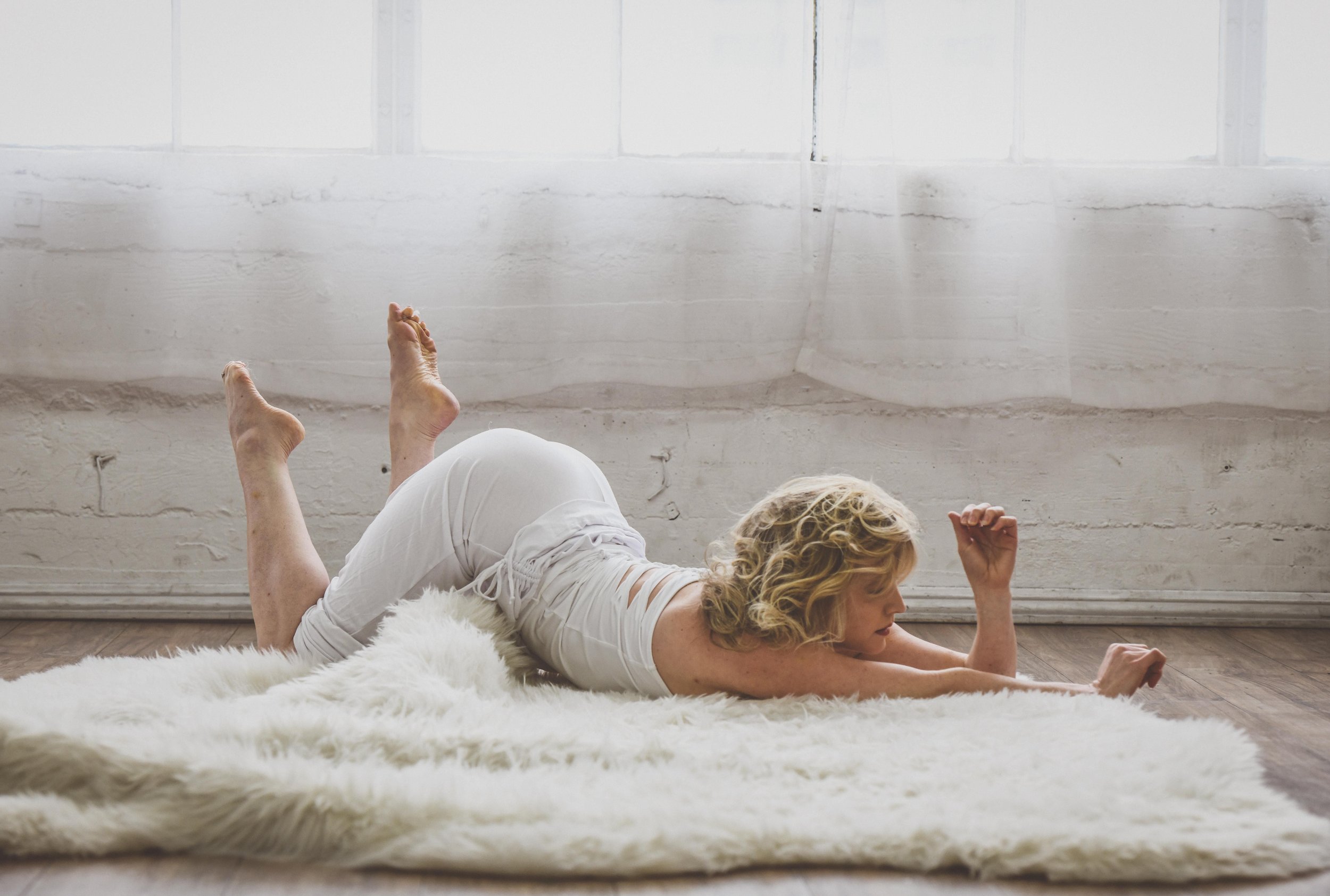
Then a friend, Rie Katigiri, who is the creator of Erotic Movement Arts based in LA, invited her to experience somatic sensual movement.
“It happened in an instant. The dark, red-lit room felt mysterious and womblike, and it held a palpable vibration of permission. At the time, I didn't even know why the darkness felt so good to me, but my body knew. She responded in nanoseconds with deep sighs and the instinct to allow the heaviness I had been carrying to collapse my bones onto the ground to alchemize.”
For perhaps the first time, this wasn't movement as achievement. There was nothing to perfect or perform. Instead, she was being invited to slow down, feel what was there, and allow herself to take up space.
Over time, Tiffany began to understand that the safety she experienced in those rooms wasn't actually coming from the darkness, the music, or even the teacher.
It was coming from inside her.
And that realization would eventually become the heart of Dance Brave.
Permission to Take Up Space
That experience stayed with Tiffany.
She began returning to somatic sensual movement and, each time, discovering another edge of herself. Some of what she encountered was exhilarating. Some of it was terrifying. But instead of moving away from the uncomfortable parts, she learned to meet them with what she describes as tenderness and deep care.
There was room to play. To crawl, kick, roll, slither. To make sound. To fill up the room. To be witnessed doing it.
Rather than asking her shadow to hide in the corners, the practice encouraged her to express herself and, importantly, settle into a place where she was loved and celebrated.
“It was here my shadows and light learned how to dance myself into both feeling and knowing my wholeness.”
That idea of wholeness is central to understanding what Tiffany would eventually create with Dance Brave.
For her, sensuality isn't about performing for someone else. In fact, she sees embodiment as nearly the opposite. It asks women to shift their attention away from How am I being perceived? and toward a much more interesting question:
How am I experiencing myself?
Tiffany believes shame, stress, and trauma can disconnect women from their sensuality and erotic aliveness and, with it, from an important source of creativity, intimacy, and self-expression. Her own experiences also led her to examine the patriarchal messages women receive about their bodies, with too much commentary on how they should look, dress, move, and age.
Dance Brave grew from her desire to create a different kind of space where women can slow down enough to notice what comes up.
Because, according to Tiffany, it will come up.
I feel stupid doing this.
Who do I think I am?
What am I supposed to be doing right now?
Her response is wonderfully simple.
Breathe.
And sloooooooow down even more.
Inside Dance Brave
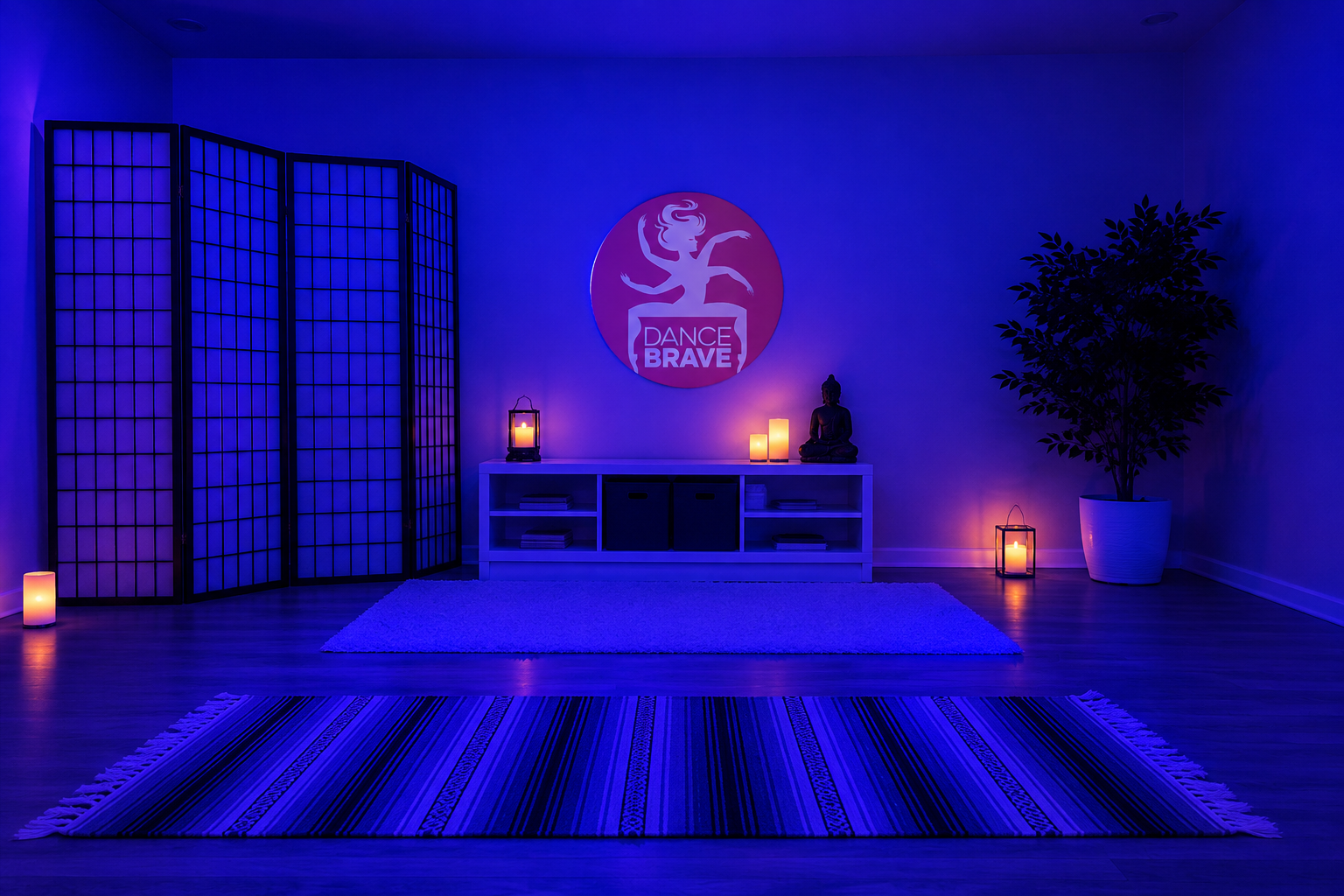
In a Dance Brave class, Tiffany intentionally darkens the room, adding candles and red or blue light to help quiet some of the outside noise and make it easier to turn your attention inward to your own shadow.
The first part of the class is spent checking in and introducing a theme, followed by myofascial self-massage work to explore areas of tension and scar tissue. Then comes the Dance Brave movement itself, with time at the end to integrate the experience.
Despite the word dance in the name, there is no choreography to learn or performance to perfect. Tiffany uses breath, movement, touch, and sound, with a focus on slowing down and staying present with whatever happens to show up.
And women of all ages show up.
Tiffany loves working with women in their twenties and thirties, when she has the opportunity to support a more embodied relationship with themselves early in adulthood. She has a particular affection for women in their forties and fifties, a brilliant season when caring about what everyone else thinks can finally begin to loosen its grip.
She has also worked with women in their seventies who are discovering a sense of aliveness they hadn't expected to find.
And as a survivor herself, Tiffany is deeply devoted to working with women who have experienced sexual assault and want to explore what healthy, fulfilling intimacy can look like in healing.
Her favorite ways to do this work are through private sessions and small group classes.
Private sessions give Tiffany room to create something highly personal, drawing from movement, chronic pain relief, trauma resolution, parts and archetype work, poetry, journal prompts, personalized homework, spot coaching, and support between sessions.
Small groups offer the experience of being witnessed.
Tiffany describes them as intimate spaces where women can practice vulnerability alongside one another and begin tending to “sister wounding.” There's something fitting about that being part of Dance Brave, too. So much of Tiffany's story is about learning to experience herself without the weight of societal judgment.
In these rooms, women have the opportunity not only to practice that for themselves, but to offer the same freedom to one another.
Part of the Pack
Tiffany has spent decades studying the body, including the privilege of dissecting the human form in multiple cadaver labs, but she has no interest in standing at the front of the room as someone who has mastered it. Dance Brave is a practice she needs, too. She considers herself part of the pack, learning alongside the women who enter her studio.
That spirit shapes the spaces she creates. There is room for vulnerability and permission to be unfinished. Pleasure and freedom are welcome, but so are rage, grief, awkwardness, and the pieces of ourselves we've learned to keep carefully contained. Tiffany sees value in all of it.
Since moving to North Carolina, she has been hungry for community and especially interested in what can change when women practice their own freedom while making room for it in one another.
These days, the woman who teaches people to take up space is increasingly drawn to peace, people, and music. Nature remains her compass, and with age, she has grown more comfortable descending into stillness, darkness, and the unknown.
Which, when you know Tiffany's story, makes perfect sense.
She has learned that the dark isn't necessarily a place to disappear.
Sometimes, it's where we finally find and embrace ourselves.
Work With Tiffany
Dance Brave is a space for women who long to have a more loving relationship with their bodies and a deeper relationship with intimacy.
If you've ever felt frozen or numb in intimacy, hesitant to be fully seen, or simply longed for deeper connection with yourself and other women, Tiffany hopes you'll know there's a place for you at Dance Brave.
However you're feeling called to explore, Tiffany offers several ways to work together.
Private Sessions
One-on-one work gives Tiffany the freedom to build the experience around you. Sessions may incorporate Dance Brave movement, chronic pain relief, trauma resolution, parts and archetype work, poetry, journal prompts, personalized practices, spot coaching, and email support between sessions.
Small Group Classes
Dance Brave classes offer an intimate space for women to explore erotic embodiment alongside other women. Classes incorporate check-in and reflection, myofascial self-massage, Dance Brave movement, breath, touch, sound, and integration with plenty of encouragement to breathe, slow down, and stay curious about what comes up.
Chronic Pain Therapy
Tiffany also works as a Chronic Pain Therapist for all genders, specializing in fascial adhesions, scar tissue, and body blind spots, drawing on more than two decades of experience in yoga, Structural Bodywork, and somatic practices.
You can learn more about Tiffany, explore current Dance Brave offerings, and find booking information through Dance Brave, or follow her on Instagram at @DanceBraveOfficial.